Instructions vs SOPs: What's the Difference?
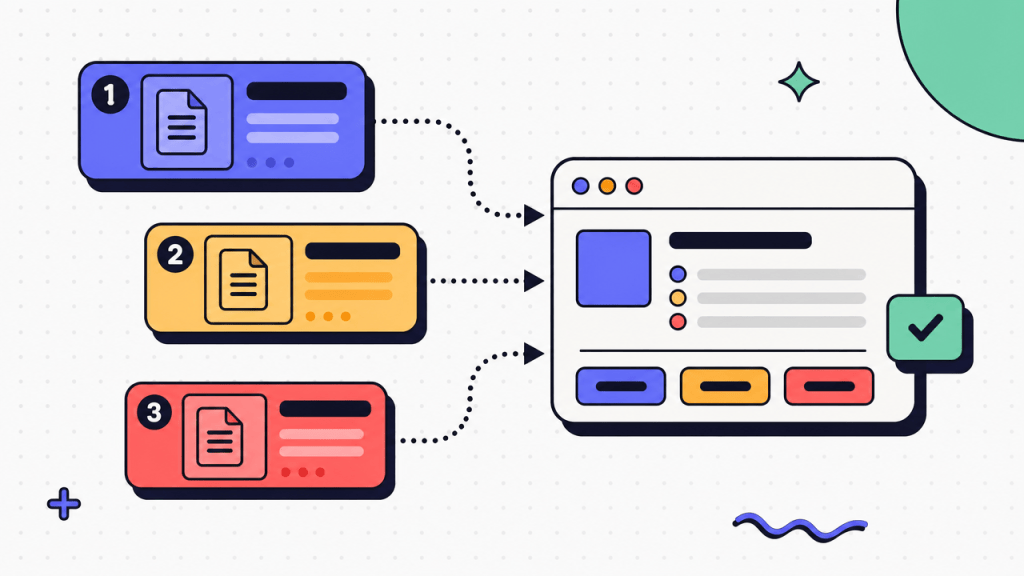
Work instructions and SOPs are not two names for the same document. One sets the standard for a whole process; the other tells one person how to do one task.
Guides, frameworks, and insights on process documentation, SOPs, AI automation, and knowledge management.
Your company already has a brain. It lives in the heads of your longest-tenured people, and it walks out the door with them every evening.
Work instructions and SOPs are not two names for the same document. One sets the standard for a whole process; the other tells one person how to do one task.
Most employee training videos get recorded, posted, and never finished. The effective ones are built for retention and completion, not production polish.
Most inboxes fail the same way: everything lands in one pile. A filter sorts it for you. Here is how to set filters up in Gmail, Outlook, and Apple Mail.
Recording your screen is one keyboard shortcut away on Windows and Mac, with nothing to install. Here is exactly which keys to press and how to make the result watchable.
Most FAQ pages answer the questions a company wishes customers asked, not the ones customers actually type, so they neither deflect a ticket nor rank.
Learn how to add emojis to Outlook emails on desktop, web, and mobile, including keyboard shortcuts and etiquette tips for professional messages.
Learn how to plan, write, and structure a user manual people actually use, with formatting, screenshot, and template tips for clear documentation.
Choosing AI video creation software is harder than the demos make it look. Learn what the tools do, the features that matter, and how to pick the right one.
Good tutorial videos are not about production value. They are about picking one task and showing it clearly enough that a stranger can follow along and finish it.
The same thumbs-up can read as warm or as passive-aggressive, depending on who opens it. Here is when email emojis help, when they hurt, and how to use them well.
Ask five people to define process documentation and most say "writing things down." That answer is exactly why so much of it gets created and never read.
Most teams know what their documentation is missing. Almost none can price the gap, which is why it never gets fixed. Here's the arithmetic your CFO would accept.
Capture-first workflow documentation lets teams ship SOPs, runbooks, and onboarding guides without anyone typing the procedure. Here's how it works, what it records, and where it falls short.
Most teams pick process documentation software from a listicle and regret it. Here's the buyer's evaluation framework: five product types, ten criteria, a scoring rubric, and four common mistakes.
2026 is a turning point for process documentation.
Most standard operating procedures fail the same way.
AI process documentation uses language models, workflow capture, and voice transcription to help teams create and maintain SOPs, runbooks, and how-to guides.
Most hybrid team training was built for the people in the room, then handed to everyone who wasn't. Here's how to build materials that actually work for the whole team.
Most self-service cultures fail the same way: the help center exists, the answers are in it, and people still message a coworker instead of searching it first.
Most tribal knowledge never leaves in a document. It leaves in a person, on their last day. Here is how to capture what only they know before they go.
Most teams pick employee training tools off a top-ten list, then regret the choice six months later when no one on the team will actually build in the thing.
Most company wikis fail the same way: not on tooling, but on ownership, freshness, and habit. Here's why they decay, and the governance that fixes it.
Most support tickets are the same question asked twice. Better internal documentation deflects the repeats, and the deflection is a number you can track.
Most onboarding stays slow because the knowledge a new hire needs lives in someone's head, not a document. Here's how documentation shortens time-to-productivity.
Most internal knowledge bases don't fail on content. They fail on findability as the base grows. Here's how to architect one that stays usable at 10x the size.
AI does not replace SOP creation. It changes where the work happens.
Picking employee onboarding software in 2026 is harder than it should be.
Writing SOPs from a blank page is the slowest way to document a process in 2026. Here's how AI process documentation actually works, what to look for in a tool, and where it still falls short.
A screen recording captures what someone actually does. Whether it becomes durable knowledge or forgotten clutter depends on what you do after you stop recording.
Most fast teams treat documentation as a tax on shipping. It isn't the writing that slows them down. It's the heavyweight way they were taught to do it.
SOP, workflow, and process map are not three names for the same thing. Each answers a different question, and reaching for the wrong one is a quiet, common tax.
AI can now train your new hires, answer their questions in seconds, and personalize every learning path. It runs all of it on whatever knowledge you already have.
Most SOPs fail the same way: quietly, in the gap between the binder and the bench. Here are the recurring mistakes that break them, and how to fix each one.
Most repetitive tasks get documented the same way: never, until the person who runs them hands in their notice. Capture them once and the write-up becomes your automation spec.
For a growing share of work, showing the task is faster to produce, easier to follow, and cheaper to keep current than describing it. Why video is winning.
Execution errors are usually clarity defects the author owns, not attention failures. Here's the craft that removes the misread, one step at a time.
How remote and distributed teams standardize workflows across time zones: the challenges, a practical sequence, and light automation to cut coordination overhead.
Most SOPs are not ignored because they were written badly. They are ignored because nobody designed them to be opened. Here is how to engineer follow-through.
An honest comparison of 6 Tango alternatives on AI capabilities, governance depth, and pricing model. Scribe, Guidde, iorad, Stonly, Loom, and Trainual scored on the same 3 axes.
Most knowledge handovers fail in the last week. Here is the 4 to 6 week playbook for capturing institutional knowledge before someone leaves, with stages, artifacts, and a decay check.
Most teams choose workflow documentation software the wrong way.
Most IT documentation libraries decay inside two years. Here are 9 features that separate IT documentation software you keep from IT documentation software you replace.
Most SOP templates go stale because they are glued to the current UI. Here are 12 SOP patterns (six structural, six operational) that survive vendor redesigns and tool changes.
New hire onboarding slows down when every cohort needs the same live walkthroughs.
Most incident response documentation gets written after the first sev1, not before.
Engineering, platform, and reliability teams ship changes every week.
If step five still points at a button that moved last sprint, the runbook failed before the engineer did.
Most SOP projects stall where the template meets the application.
No credit card. No sales pitch.
Fill out the form and we'll get back to you as soon as possible.
Tell us about your team and we'll find the right plan together.