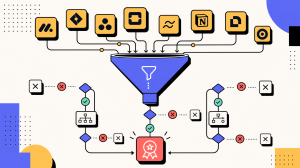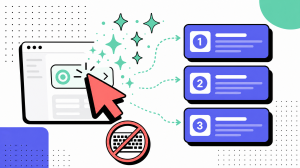
I have watched teams learn this the slow way. A distributed team rolls out a shared project tool and mandates an overlap window, and the output stays as inconsistent as before.
What finally moves the needle is smaller and less glamorous: one agreed way to run each recurring process, written so a colleague eight hours ahead could pick it up cold.
That is workflow standardization. For a distributed team, it is the difference between one that scales and one that lives in status meetings.
This article is the practice, not the purchase. For the broader buying decision, see our guide on how to choose workflow documentation software for your team.
Here we stay on the method: what breaks in remote work, why standardization is the fix, and the sequence for getting there without turning your team into a compliance department.
Key takeaways
- Standardization is not the enemy of remote autonomy. It is the precondition for it. A team that agrees on the process can stop coordinating in real time and start working in parallel.
- Remote variance lives in the seams: undocumented handoffs, private context, and decisions that only make sense if you were in the meeting.
- Standardize the recurring 20% of work that causes 80% of the pings. Leave creative work alone.
- Write for the colleague who is asleep. If a process only runs when a specific person is awake to explain it, it is not standardized.
- Capture beats recall: record a workflow once by doing it, and light automation on the handoffs removes the coordination tax that makes distributed teams feel slow.

What workflow standardization means for a remote team
Workflow standardization is the practice of defining one agreed way to run a recurring process (the steps, the inputs, the handoffs, and the definition of done) so that any qualified person produces the same result regardless of who is working or when.
On a co-located team, a lot of that agreement lives in the air: you overhear the answer, you tap someone on the shoulder, you see how it is done. Remote work removes the air. What is left is whatever you wrote down.
So standardization on a distributed team is mostly a documentation-and-handoff discipline. It is less about enforcing conformity and more about making the current best way to do something legible to a person you cannot reach.
Get that right and the payoff is not uniformity for its own sake. It is speed: fewer syncs, cleaner handoffs, and work that moves while half the team sleeps.
Why remote work makes unstandardized workflows fall apart
A co-located team can run on tribal knowledge for years. Someone always knows. The person who set up the client onboarding still sits three desks away, and the gaps in the process are filled by proximity faster than anyone notices they are gaps.
Distance is the stress test that reveals them.
Three failure modes show up almost immediately when a team goes distributed.
The handoff gap
Work that used to pass hand-to-hand now crosses a time zone. When a designer in Lisbon finishes a deliverable at 6 p.m. and the reviewer in Denver does not start until eight hours later, any ambiguity in "what happens next" costs a full day, not a shoulder-tap.
Ambiguous handoffs are cheap in a shared room and expensive across a clock.
Private context
In an office, context leaks. You hear the sales call, you catch the hallway decision, you absorb why the process bends for this one client.
Remote, none of that leaks unless someone decides to write it. The result is a team where every person runs a slightly different version of the "same" workflow, each correct in its own head.
The synchronous tax
The instinctive fix for all of the above is a meeting. Add a standup, add an overlap window, add a call to "align." Each one narrows the hours when work can happen and taxes the exact autonomy that made remote work attractive.
A team that answers process ambiguity with more meetings has not solved the problem. It has paid for it in calendars.
None of these are software problems, which is why buying a new tool rarely fixes them. They are seams, the untended spaces between people's work, and seams are closed with documentation, not licenses.
For the full economic case on what those gaps cost, see the hidden cost of poor process documentation.
Why standardization is what makes async autonomy possible
Here is the objection worth taking seriously: standardization sounds like the death of the flexibility that makes remote work good. Lock down the process and you get a team of rule-followers waiting for permission, the office at its worst, rebuilt over Slack.
That gets the causality backward.
A remote team can grant real autonomy because the process is agreed in advance. When the steps, inputs, and definition of done are written and shared, people can execute without checking in. The check-in already happened, once, in the document.
Ambiguity is what forces synchronous coordination. If someone is unsure of the next step, they have to ask. And asking means waiting for someone else to be awake.
The goal is not to make everyone work the same way. It is to make the recurring path so clear that people stop needing each other to walk it.
Standardize the mechanical, and you free the human.
Shared hours become available for the judgment calls that actually need a conversation. A distributed team without standard workflows is not more autonomous. It is more blocked, and the blocks arrive as a slow drip of "quick questions" instead of a visible line at someone's desk.
Best practices for standardizing remote workflows
The sequence below is what works on a distributed team, ordered with the benefit of hindsight about where it tends to break. Treat it as a walkthrough, not a checklist to satisfy.
Second person on purpose: you are the one doing this.
1. Surface the variance before you standardize anything
Pick one recurring workflow and ask three people who run it to describe how they do it. You will get three different answers, and the differences are the map.
Do not standardize the version in your head. Standardize the version that reconciles what the team is really doing, keeping the best of each. Standardization that ignores real practice gets ignored right back.
2. Standardize the recurring core, not the creative edge
Aim for the recurring 20% of work that generates 80% of the coordination: the client kickoff, the release checklist, the weekly report, the access request. Leave novel or creative work unstandardized on purpose.
A team that tries to script everything produces brittle documents nobody trusts. A team that scripts the repeatable and frees the rest gets both consistency and range.
3. Write for the person who is asleep
This is the single test that separates remote-ready documentation from office documentation. Read your process back and ask: could a competent colleague eight time zones away run this cold, with no one to ask?
If the answer depends on a conversation, the process is not standardized. It is a meeting agenda in disguise.
Name the trigger ("run this when a new client signs"), the owner, the exact steps, and the definition of done.
4. Make the handoff explicit, because the handoff is where distance bites
For every point where work leaves one person and lands on another, write down what "ready to hand off" means and where the next person picks it up.
Async teams do not fail in the middle of a task. They fail in the gap between two tasks, when nobody is sure whose turn it is.
5. Capture the workflow instead of writing it from memory
The fastest way to produce an accurate standard is to record the real process as someone performs it, rather than reconstructing it later from memory.
Writing a detailed procedure from scratch often runs 90 to 120 minutes; capturing the same workflow by doing it once tends to take closer to 8 to 15 minutes, and it is more accurate because it captures the steps that muscle memory hides.
For the mechanics of this approach, see capturing workflows without writing them out by hand.
6. Give every standard an owner and a way to be wrong
A workflow with no owner rots the moment the interface changes or the team learns a better way. Put a name on each one and a low-friction path to flag "this step is stale."
A standard that cannot be corrected becomes a standard the team routes around.
For a method to keep the underlying procedures consistent, use a repeatable framework for standardizing procedures.
Designing the process, not shopping for the tool
The temptation at this stage is to reach for software. Resist it for one more section, because the design decisions below hold true whatever tool you land on, and getting them wrong makes any tool fail.
Decide where the single source of truth lives, and make it one place.
The most common remote-standardization failure is not the absence of documentation. It is three half-current copies: one in a shared doc, one in a pinned Slack message, one in someone's head.
Notion, Confluence, and even a well-kept folder of docs can all host a standard workflow. What matters is that there is exactly one canonical version and the team knows which one it is. A workflow with two homes has none.
Structure for retrieval, not for reading.
Nobody reads a process document front to back. They arrive mid-task, mid-panic, looking for one step.
Write in short, self-contained chunks with plain headings that match how someone would search: "how to hand off a design for review," not "Phase 3: Downstream Coordination."
A standard nobody can find at the moment they need it is a standard that does not exist.
Keep freshness above coverage.
A library of 100 stale workflows is worse than 30 that are current, because the stale ones teach the team to distrust all of them. Standardize fewer processes and keep them true. Coverage you cannot maintain is documentation theater.
Only after these decisions are made does tool choice matter, and even then it is a fit question, not a features race. When you reach it, route the evaluation to how to choose workflow documentation software for your team rather than relitigating it here.
Automating the coordination, not the judgment
Automation earns its place in a remote team by removing the coordination overhead (the pinging, the reminding, the "is this ready yet") rather than by doing the work. The line to hold: automate the seams, not the substance.
A few practical patterns, kept deliberately concrete:
- Trigger the handoff. When a task hits "ready for review," let the tool notify the next owner and move the item, instead of relying on the finisher to remember to ping across a time zone.
The handoff should fire whether or not anyone is awake to push it.
- Automate status, not decisions. Let the system answer "where is this?" so nobody has to ask in a meeting. Keep the go/no-go call with a human.
Automating a judgment you have not standardized only launders a bad decision faster.
- Make the standard come to the work. The best automation surfaces the relevant checklist inside the tool where the work already happens, so following the standard is easier than ignoring it.
A process people have to leave their workflow to find is a process they will improvise around.
Notice what is missing: none of this is about replacing a person with a bot. On a distributed team, the expensive thing is not the task. It is the waiting, the asking, and the re-syncing between tasks.
Automate that, and the standard runs itself across the clock. The AI handles the mechanical steps; the human handles the judgment steps.
Two teams, one standardization sequence
Abstract advice reads fine and applies to nothing. Here is the same sequence running in two distributed teams that look nothing alike.
A distributed creative agency
Designers and strategists sit across five countries, and every client project runs a little differently depending on who staffs it.
They start by surfacing the variance: three project leads describe "how we deliver a project" three different ways. They reconcile those into one delivery workflow, with a named kickoff trigger, a fixed set of milestones, an explicit "ready for client review" definition, and a single owner for each stage.
Handoffs between design and strategy become automated instead of remembered pings. The weekly status call becomes a document anyone can read at 3 a.m. in their own time zone. Delivery stops depending on which strategist happens to be online.
A remote development team
Engineers in three regions deploy on a rotating basis, and every release carries a little folklore about "the way we do it" that only the last person to ship remembers.
They capture the release process by recording a real deployment instead of writing it from memory. That catches the two undocumented steps everyone performs automatically but nobody has written down.
Next they define the handoff explicitly: what "ready to deploy" means, who owns the go-ahead, and where the on-call engineer picks up if something breaks.
Finally, they automate status updates so the next region always knows the state of the pipeline without asking. The release stops being a synchronous ceremony and becomes an async runbook any qualified engineer can execute cold.
Different work, identical shape: surface the variance, standardize the recurring core, make the handoff explicit, capture rather than reconstruct, automate the coordination. The domain changes. The discipline does not.
Standardization is what lets a remote team stop waiting on each other
A distributed team does not slow down because its people are slow. It slows down because work keeps stalling in the gaps between them: the unclear handoff, the missing context, the question that has to wait for someone to wake up.
Standardization closes those gaps.
Done as a documentation-and-handoff discipline rather than a compliance push, it does not cost the team its autonomy. It is what makes the autonomy safe to grant.
For the broader discipline of documenting processes without adding drag, see documenting processes without slowing your team down. Start with one workflow, write it for the colleague who is asleep, and let the standard do the coordinating you used to do in meetings. The best remote process is the one nobody has to be online to explain.