Your company already has a brain. It lives in the heads of your longest-tenured people, and it walks out the door with them every evening.
Every team has that person everyone messages when the billing export breaks or a client onboarding stalls. Their answers are fast, accurate, and completely undocumented. While they are on vacation, work waits.
McKinsey put a number on the problem back in 2012: interaction workers spend nearly 20% of the workweek searching for internal information or tracking down colleagues who can help. The knowledge exists. It is just not written anywhere a system, or a new hire, can find it.
Standard operating procedures fix this. Not as dusty compliance binders, but as the training data for your company brain: a shared, queryable memory of how work gets done that your team, and increasingly your AI tools, can draw on.
What a company brain actually is
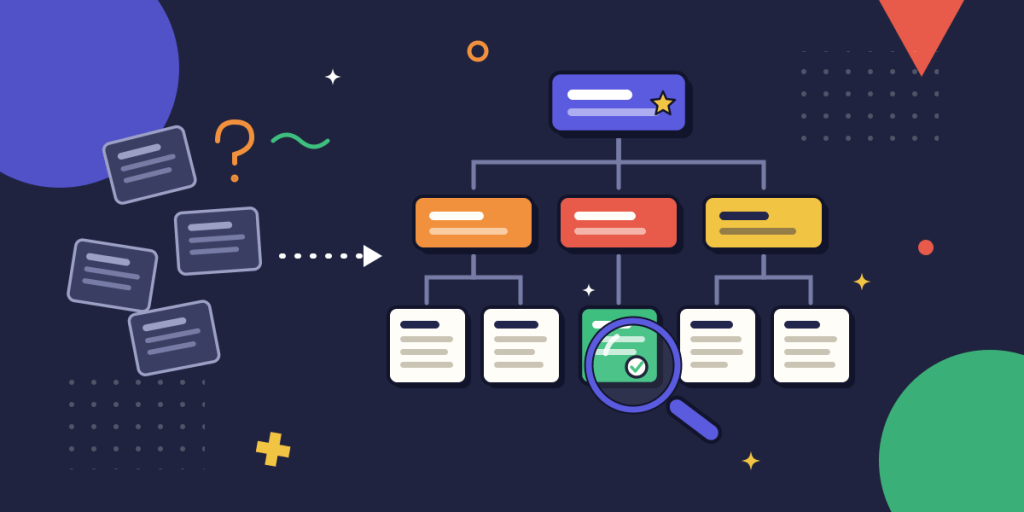
A company brain is the queryable memory of your organization. Ask it how refunds get approved and it returns the actual procedure, the actual owner, and the source document. That is the difference from a wiki. A wiki stores pages. A company brain answers questions.
Organizational memory has 3 layers. Facts are what your company knows: pricing, policies, product specs. Decisions are why things work the way they do. Procedures are how work gets done. The procedural layer creates the most day-to-day value, and it is the most neglected, because it lives in muscle memory instead of documents.
Building the brain is a practice, not a purchase. The tool matters less than the habit of turning work into documented, findable, current procedures.
Why SOPs are the ideal training data
An SOP is the smallest complete unit of process knowledge. Done well, it names a trigger, an owner, the steps, and a done state. That structure is exactly what makes knowledge usable, by people and by machines.
SOPs are atomic
A good SOP covers a single outcome. That makes each document independently useful, independently updatable, and easy to retrieve. Nobody has to read a 40-page manual to find step 6.
SOPs are verifiable
A procedure either produces the documented result or it does not. When an SOP drifts from reality, the next person who runs it notices. Meeting notes and chat threads never get that error check.
SOPs compound
10 SOPs answer 10 questions. 200 SOPs start answering questions nobody anticipated, because retrieval systems can combine them. Every procedure you document makes every other procedure easier to find, link, and trust.
The cost of keeping knowledge in heads
Panopto's Workplace Knowledge and Productivity Report measured this in 2018, and the numbers are uncomfortable. 42% of institutional knowledge is unique to the person holding it. When they leave, nearly half of what they know leaves too.
The same study found US knowledge workers waste 5.3 hours every week waiting for information from colleagues or recreating work that already exists, and put the annual productivity loss for a large US business at $47 million.
Those are 2018 figures, and distributed work has scattered knowledge further since. The exact numbers matter less than the pattern: undocumented process knowledge is a measurable liability, and it grows with every hire.
Write SOPs a brain can digest
Not every document trains the brain. A wall of text with no screenshots helps nobody, and retrieval systems struggle with it just as much as humans do. 5 elements make an SOP digestible:
- A trigger: the event that starts the procedure, like a refund request over $500
- An owner: a single named role responsible for the outcome
- Steps: numbered actions, with a screenshot for every state change
- A done state: what the world looks like when the procedure worked
- A date: when the SOP was last verified against reality
Keep each SOP to a single outcome. If your draft needs a table of contents, it is several SOPs wearing a trenchcoat. Split it.
Rules of thumb
- If a question gets asked twice in chat, it becomes an SOP.
- If an SOP needs a meeting to explain, it is too long.
- If nobody has run an SOP in 6 months, review it or retire it.
Capture at the point of work, not after
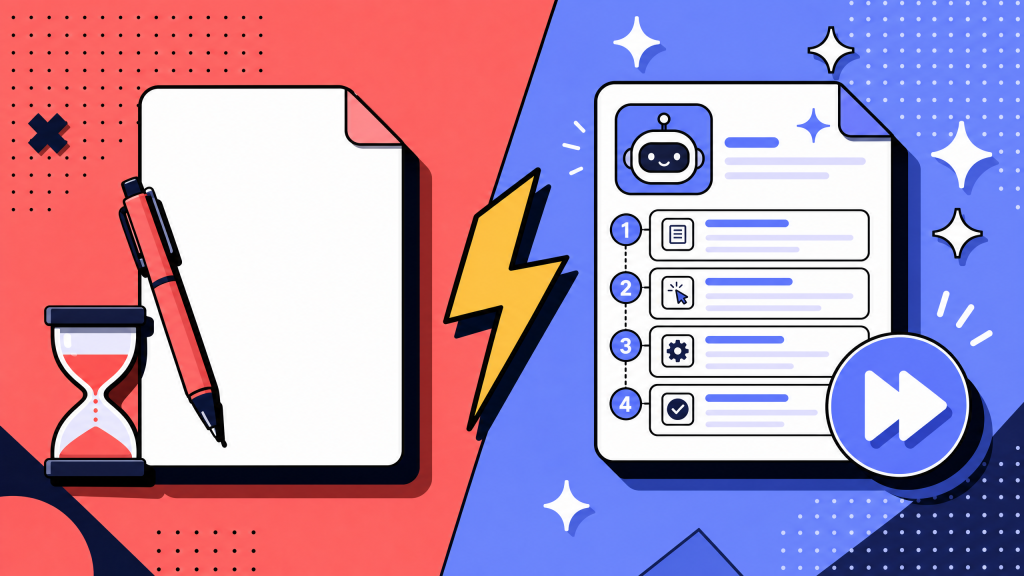
The main reason SOPs go unwritten is that documentation gets treated as a separate task, scheduled for a Friday afternoon that never arrives. By the time someone sits down to write, the details have evaporated.
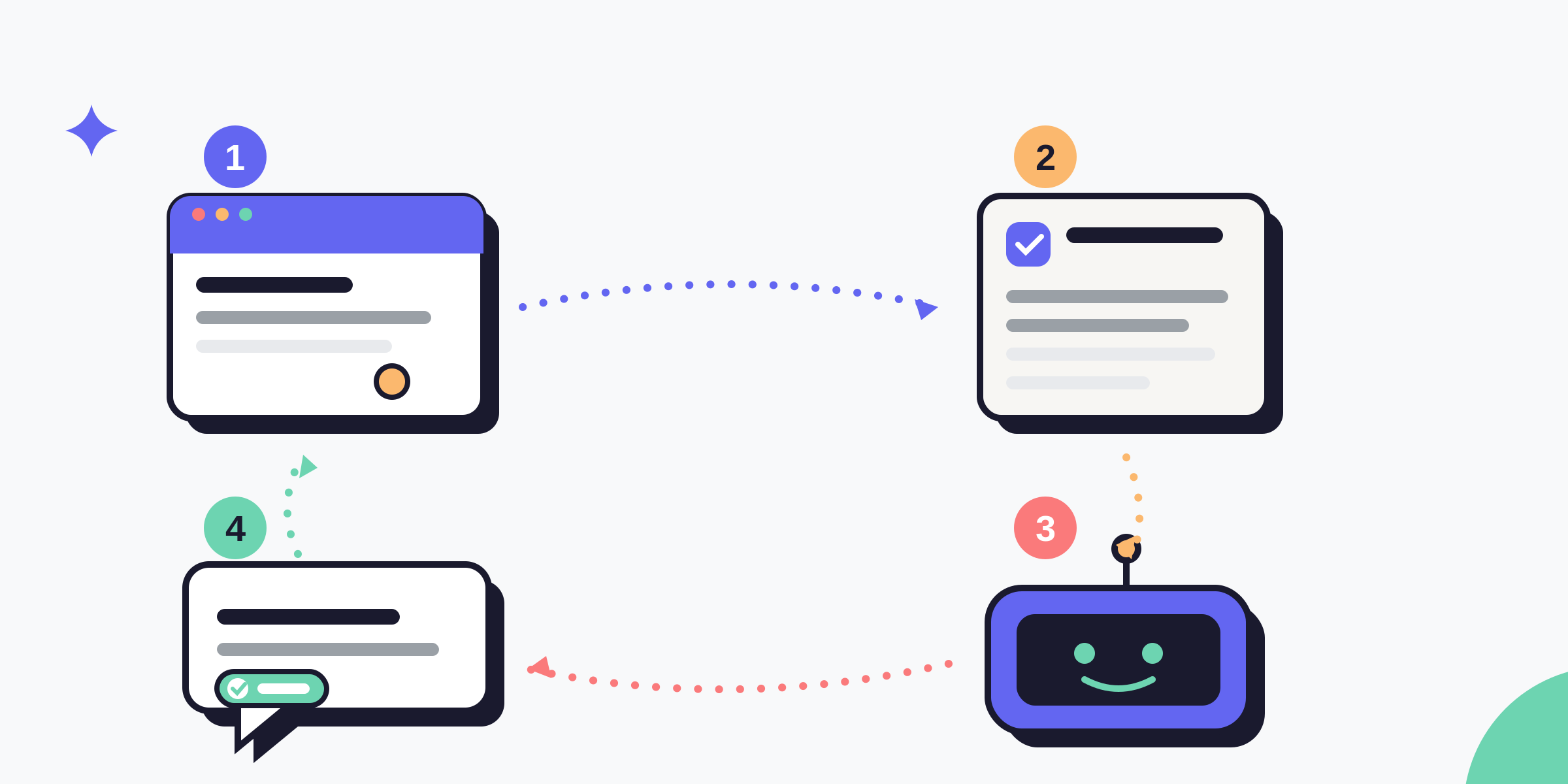
The fix is to capture the process while you run it. With a capture extension on, every click becomes a step and AI writes the description. 3 clicks to capture. 2 minutes to publish. The screenshots take themselves.
When documenting a process costs 2 minutes instead of 2 hours, the calculus flips. You stop debating whether a process deserves an SOP and start asking why it does not have one yet.
Connect SOPs so they answer questions
A folder of SOPs is not yet a brain. Connection is what turns documents into answers.
- Give the library a single home, so nobody wonders where to look
- Name procedures verb first: Approve a refund, Onboard a new vendor
- Use categories that match how people actually search
- Link related procedures so each answer leads to the next
Then add a retrieval layer. Modern AI assistants can index a structured SOP library and answer questions with the source attached. The quality of those answers tracks the quality of the underlying SOPs directly. Garbage in, confident-sounding garbage out.
Build the feedback loop
A brain learns. Your SOP library should too. 3 signals tell you where to focus:
- Questions still asked in chat despite an existing SOP: the document is unfindable or unclear
- Searches that return nothing: a coverage gap and your next SOP assignment
- Procedures that fail when followed exactly: reality changed and the document did not
Over time the team's role shifts from writing to reviewing, correcting, and approving. That is what training the company brain looks like in practice. The humans become editors of the organization's memory, and the memory keeps getting sharper.
Keep the brain alive
Documentation systems die of neglect, not bad launches. 3 habits keep yours current.
- Give every SOP an owner, and transfer ownership when people change roles
- Review on a cadence: quarterly for critical procedures, twice a year for the rest
- Retire aggressively. A wrong SOP is worse than no SOP, because people trust it
Most important, update at the moment of change. When a process changes, updating its SOP is part of the change, not a follow-up task for later.
The easiest place to start is the next process you run. Capture it as you work, and your first contribution to the company brain is done before lunch. Add Haiku to Chrome. Genuinely free. No credit card required.
Frequently asked questions
What is a company brain?
It is the shared, queryable memory of how your organization works: its procedures, policies, and know-how, stored so people and AI tools get sourced answers instead of searching pages. SOPs form its procedural core.
Aren't SOPs too rigid for fast-changing teams?
Only when they are written as long, static manuals. Atomic SOPs with a single outcome and a named owner are quick to update when a process changes. Fast-moving teams need them more, not less, because verbal knowledge transfer breaks first under speed.
How do we start when nothing is documented?
Do not schedule a documentation quarter. List the 10 questions your team answers most often in chat and capture those procedures first, ideally while someone runs them. 10 good SOPs beat 100 stale pages.
How do SOPs feed AI tools?
AI assistants answer from what they can retrieve. Structured SOPs, with clear titles, single outcomes, and current steps, are the highest-quality source material you can give them. The better the SOP library, the more accurate and traceable the AI's answers become.
How often should SOPs be reviewed?
Review critical procedures quarterly and the rest twice a year, and update any SOP at the moment its process changes. The review is cheap: run the procedure as written and note where reality disagrees.